
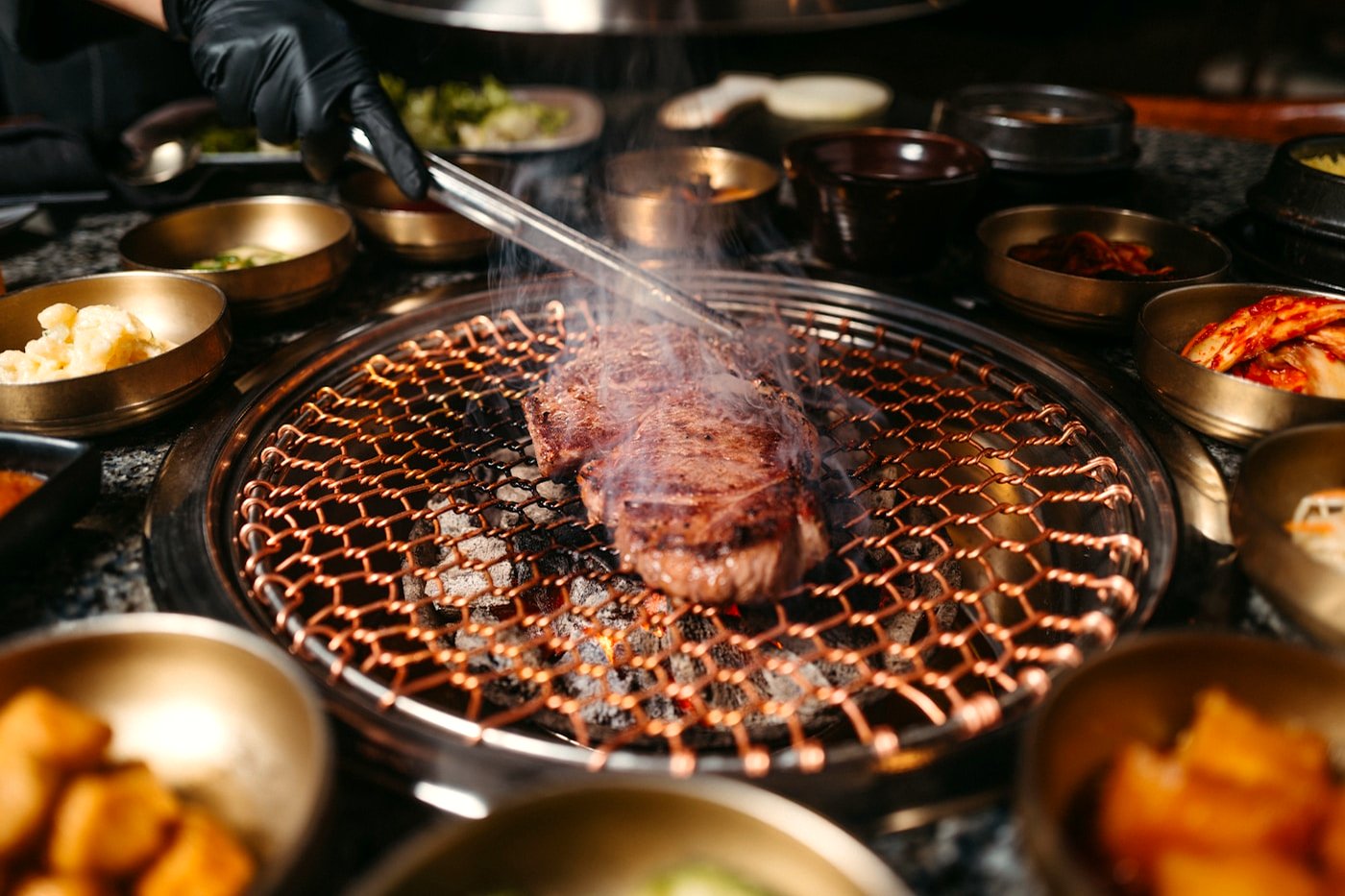
Useol — 우설 — is the cut Korean gastronomes call the best part of the cow. The Singaporean table looks at it and pauses. The pause is the story.
Most tables we serve at our Bugis room order beef tongue last, if at all. The Korean diner orders it first. The split is not a question of taste. It is a question of habit, and the habit on the Singapore side is younger than the diners holding it.
What useol actually is
Beef tongue is a working muscle — dense, lean at one end and richly collagenous at the other, threaded with a fine fat that sits between fibres rather than around them. In Korean butchery, the tongue is fabricated separately from the ten standard primals and treated as a specialty cut rather than offal in the dismissive sense. The Korea Tourism Organisation describes useol as “considered the best beef cut among gastronomes” — a sentence that would be unremarkable in Seoul and surprising in most Singapore households.
The premium status is structural, not nostalgic. A single Hanwoo tongue weighs around 1.5 kilograms before trim, and once the rough membrane and root are taken off, the usable yield drops to a fraction of that. The middle section — what Korean butchers call the tan-moto belt borrowed back from Japanese yakiniku — is where the texture is finest and where the price climbs. At a hanwoo specialist in Seoul, useol routinely sits at or above the price of sirloin.
The texture is the argument
A tongue is not a soft cut. Sliced wrong it eats like an eraser. Sliced right — across the grain, between two and three millimetres, on a slightly chilled blade — it does something no other cut on the grill does: it gives a clean snap on the first bite, then collapses into a slow chew as the collagen between fibres softens against the palate. The flavour is mineral and unmistakably beef, without the iron edge of liver or the sweetness of marbled loin.
Beef tongue is not a frugal cut at a Korean grill. It is a premium cut whose price is structural — and the only reason it surprises Singapore is that Singapore stopped eating like Singapore.
The Singapore pause is recent
The hesitation at the tongue is not a Singaporean baseline. It is a drift. Singapore’s National Heritage Board, in its intangible cultural heritage entry on kway chap, lists pig’s tongue, intestine, skin and stomach as default components of a Teochew dish that arrived with migrants from Chaoshan and ran the city’s roadside stalls into the 1960s. Pig’s organ soup — Hokkien, also widely sold at hawker centres — works the same vocabulary: tongue, liver, stomach, kidney, in a peppery broth. Two generations ago an offal stall was as common as a chicken rice stall.
What changed was the supply chain and the supermarket aisle, not the palate. Cling-wrapped boneless cuts pushed organ meats to the back fridge and then off the shelf entirely. Kway chap stalls now warn that “organ meat and other parts of the pig apart from the meat are just not popular anymore”. The aversion travelled in with the format, not from the taste.
How the grill treats it
Useol cooks fast. On a charcoal grate, ninety seconds a side at 2mm thickness brings it to the edge between snap and yield. It wants three things on the plate and nothing on the meat: a small pile of julienned scallion in lemon, a bowl of salt with a few drops of sesame oil, and the next slice ready before the first has cooled. No marinade. No pre-salt. The cut is the seasoning.
It also belongs near the front of an order, not the end. Like the chadolbaegi that opens the grill, useol asks for a clean grate and a sharp palate. By the time pork belly has run, the tongue’s mineral note will read muddy. First slice, hot grill, lemon-scallion on top — the order matters as much as the cut.
The tongue surprises Singapore because the table forgot a habit it once had. Order it on a takeaway tray or on a charcoal table, sliced thin, and the surprise resolves quickly. The mouth remembers faster than the supermarket did.
Source: Kway Chap — Singapore Intangible Cultural Heritage Inventory, National Heritage Board, on the historical centrality of pig offal (tongue, intestine, skin, stomach) in Teochew Singaporean cuisine. Useol cultural status cross-referenced with Korea Tourism Organisation (VISITKOREA) entry on grilled beef tongue.