
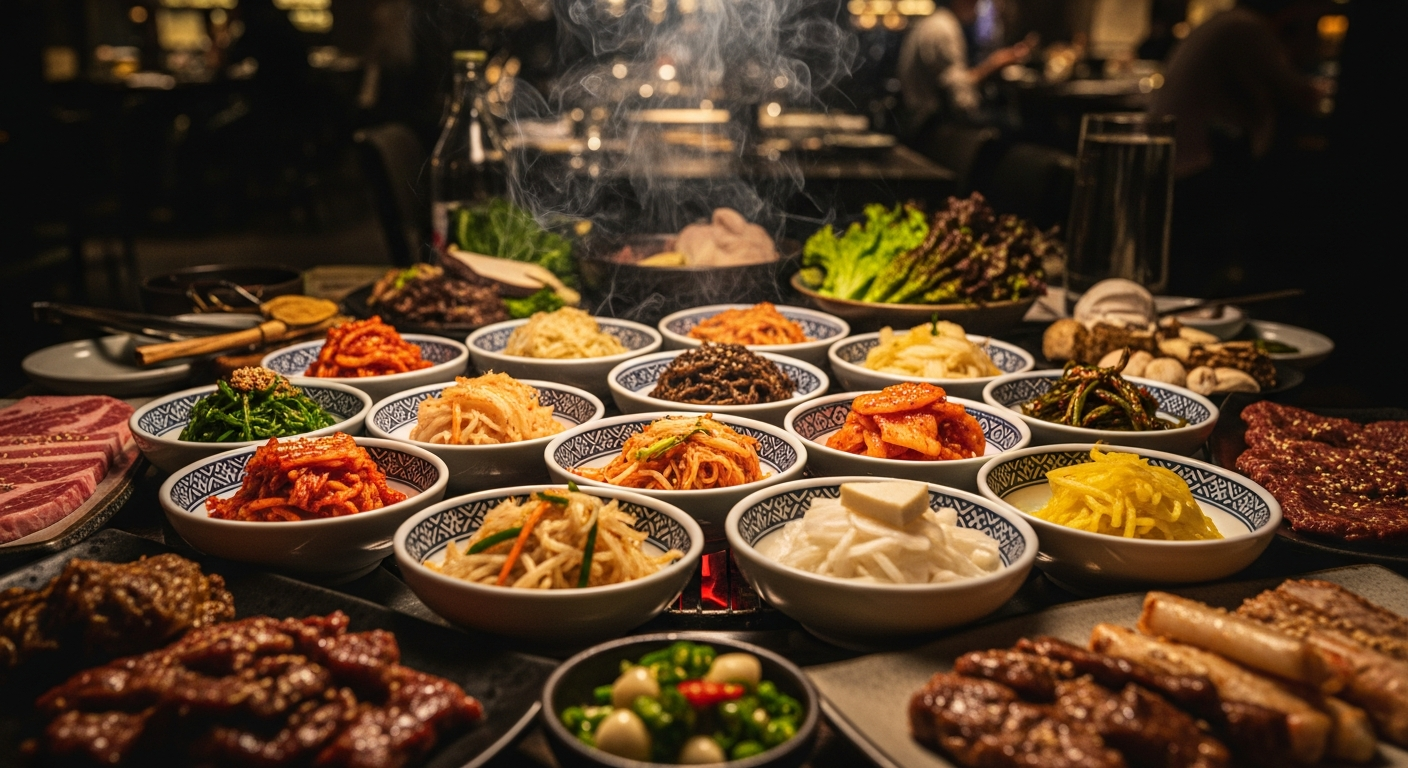
Understanding Korean Banchan: More Than Just Side Dishes
If you’ve ever dined at a Korean restaurant in Singapore, you’ve likely encountered banchan—those small, colourful dishes that arrive at your table before your main course. Often mistaken as mere accompaniments, Korean banchan are actually nutritional powerhouses that form the foundation of authentic Korean cuisine. At 8 Korean BBQ, we believe that understanding what you’re eating is essential to appreciating both the flavour and health benefits of your meal.
Banchan aren’t just filler; they’re carefully crafted dishes with specific health purposes in Korean dining culture. Whether you’re enjoying our dine-in experience at Clarke Quay or The Central, strategically positioned near Bugis MRT, or ordering delivery, knowing the nutritional value of Korean banchan can help you make informed choices that align with your health goals.
What Are Banchan? The Cornerstone of Korean Meals
Banchan refers to small side dishes served complimentary (or for a small charge) at Korean restaurants. These dishes typically include fermented vegetables, seasoned greens, preserved seafood, and other traditional Korean foods. Unlike Western dining culture where sides are secondary, in Korea, banchan are integral to the meal experience.
Commonly served banchan include kimchi, seasoned spinach (sigeumchi namul), dried seaweed (gim), pickled radish (danmuji), and various vegetable preparations. At 8 Korean BBQ, our banchan selection changes seasonally and features authentic recipes using premium ingredients—and importantly, our cooking processes are completely seed oil free, setting us apart from most Korean restaurants in Singapore.
Calorie Content: What to Expect from Korean Banchan
One of the most common questions about Korean banchan nutrition Singapore diners ask is: “How many calories are in these side dishes?” The answer varies depending on preparation methods and portion sizes.
Typical Banchan Calorie Ranges:
- Kimchi: 20-30 calories per serving—mostly from fermented vegetables with minimal added oil
- Seasoned spinach (namul): 40-60 calories—dressed lightly with sesame oil and garlic
- Steamed egg (gyeran jjim): 80-120 calories—protein-rich and satisfying
- Pickled radish (danmuji): 15-25 calories—refreshing and aids digestion
- Seasoned bean sprouts (sukju namul): 50-70 calories—crunchy, nutrient-dense
- Dried seaweed (gim): 5-10 calories per sheet—incredibly nutrient-dense for minimal calories
The beauty of banchan lies in their calorie efficiency. Most servings contain fewer calories than a single biscuit, yet deliver significant nutritional benefits. This makes Korean banchan nutrition particularly appealing for health-conscious diners in Singapore looking to enjoy flavourful food without excessive calorie intake.
Key Nutritional Benefits of Korean Banchan
Probiotics and Gut Health
Fermented banchan like kimchi and other pickled vegetables are rich in probiotics—beneficial bacteria that support digestive health. A single serving of kimchi provides live cultures that enhance gut microbiome diversity. For Singaporeans concerned with digestive wellness, this is a significant advantage of traditional Korean dining.
Vitamins and Minerals
Korean banchan are nutritional MVPs when it comes to micronutrients. Leafy green banchan provide folate, iron, and calcium, while pickled vegetables retain much of their vitamin content through fermentation. Seaweed banchan are particularly rich in iodine, which supports thyroid function—something often lacking in modern diets.
Low Sodium Concerns (With Caveats)
While some banchan can be high in sodium due to fermentation and seasoning, the portion sizes served mean individual sodium contribution is manageable. A typical meal’s banchan collectively add 300-500mg sodium, which is reasonable within daily limits. At 8 Korean BBQ, we’re mindful of this balance in our recipes.
Fibre Content
Vegetable-based banchan contribute dietary fibre, supporting digestive regularity and satiety. The combination of multiple banchan varieties ensures you’re receiving different types of fibre from various plant sources.
Antioxidants
Korean banchan featuring garlic, ginger, and gochugaru (Korean chilli flakes) are packed with antioxidants. These compounds fight inflammation and oxidative stress—particularly relevant for Singaporeans navigating tropical heat and urban stress.
The Seed Oil Advantage: Why Cooking Method Matters
At 8 Korean BBQ, our commitment to seed oil free cooking extends to our banchan preparation. Most Korean restaurants in Singapore use canola or vegetable oil, but we exclusively use non-seed oils like perilla oil and sesame oil. This distinction significantly impacts the nutritional profile of our Korean banchan nutrition offerings.
Seed oils are high in omega-6 polyunsaturated fats, which can promote inflammation when consumed in excess. By eliminating seed oils entirely, our banchan and all dishes support a more balanced omega-3 to omega-6 ratio—increasingly important for health-conscious diners in Singapore.
Banchan as Part of Korean BBQ Balance
When you order Korean BBQ in Singapore, banchan play a crucial nutritional role. While marinated meats are protein-rich and satisfying, banchan provide fibre, vitamins, and fermented foods that aid digestion. This combination creates a more balanced meal than BBQ alone would provide.
Interestingly, traditional Korean meals were designed with this nutritional synergy in mind. Fermented vegetables help digest proteins, while the variety of textures and flavours prevents overeating of any single item. This is why Korean army stew (budae jjigae) and other communal dishes at 8 Korean BBQ always include vegetable components—they’re not just tasty additions but nutritional necessities.
Making Informed Choices: Banchan Selection Tips
For calorie-conscious diners: Opt for steamed and fermented banchan like kimchi, pickled vegetables, and seaweed rather than those with heavier oil-based dressings.
For nutrition maximisation: Enjoy variety. Different banchan provide different nutrients, so sampling several ensures broader micronutrient intake.
For sodium management: Balance salty banchan with plenty of water and unsalted options if available.
For delivery customers: Request banchan fresh where possible, and consume fermented varieties within 2-3 days for optimal probiotic content.
Korean Banchan Nutrition Singapore: Making It Part of Your Health Journey
Whether you’re a Korean food enthusiast or exploring Korean cuisine for the first time, understanding Korean banchan nutrition Singapore helps you appreciate these dishes beyond their delicious taste. At 8 Korean BBQ, we’re committed to serving authentic Korean banchan prepared with premium ingredients and seed oil free methods—ensuring you’re not just enjoying exceptional flavour, but supporting your health goals too.
Our banchan offerings at both Clarke Quay and The Central, strategically positioned near Bugis MRT reflect traditional Korean recipes with modern health consciousness. If you’re ordering delivery or planning a group celebration, our banchan selections complement every dish perfectly.
Experience Authentic, Health-Conscious Korean Dining
Ready to discover the nutritional benefits of authentic Korean banchan? Visit 8 Korean BBQ at Clarke Quay or The Central, strategically positioned near Bugis MRT for a communal dining experience, or order our delivery sets featuring premium marinated meats and traditional side dishes. Every meal comes with carefully selected banchan designed to balance taste and nutrition.
Book your table or place a delivery order today—experience Korean BBQ Singapore done right, with seed oil free cooking and authentic flavours that nourish your body.